
An online learning space for science educators and students.
We provide high-quality, accessible, educational material in the science, technology, engineering and mathematics (STEM) disciplines at the introductory undergraduate level.
We provide high-quality, accessible, educational material in the science, technology, engineering and mathematics (STEM) disciplines at the introductory undergraduate level.
About Us
Our exclusive content integrates science and engineering practices with disciplinary core ideas and cross-cutting concepts in alignment with the Next Generation Science Standards.
About NGSSOur library includes more than just scientific concepts. Our learning modules explore the stories of the people behind the science and how we have come to know what we know.
Our Glossary is a comprehensive collection of scientific terms and concepts used in the STEM disciplines. It's a valuable resource for students, educators, and anyone interested in understanding scientific concepts and terminology.
Our Classroom is a customizable environment dedicated to the content available on the website. Here educators can create personalized classrooms with specific course modules, make comments, store lesson plans, and track student progress.
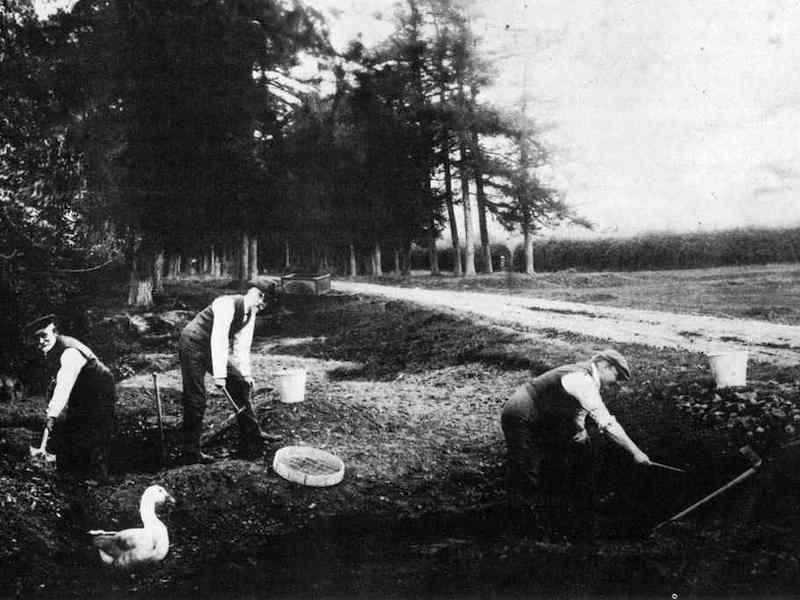
Ethical standards are a critical part of scientific research. Through examples of scientific fraud, misconduct,...
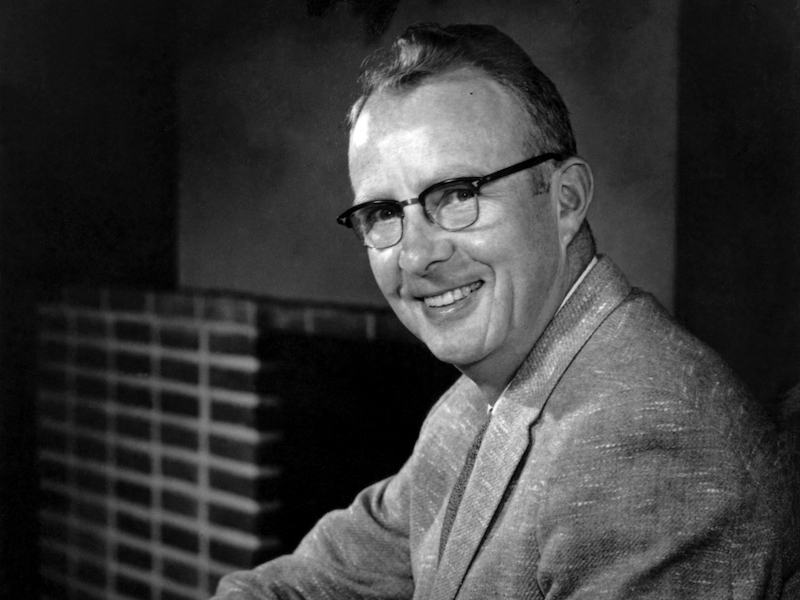
Luis Alvarez is less famous for his Nobel prize-winning research into subatomic particles than for...


Changes in the genetic makeup of a population affect the incidence of certain traits and...

Life as we know it is a wonderfully diverse enterprise. Organisms pass traits from parent to offspring, function in a varied and changing environment, and carry out a myriad of complex biochemical processes. Understanding the principles of biology helps give context and clarity to larger scientific and social issues. Our biology learning modules reveal the current state of scientific understanding on topics like cell structure and function, genetics, taxonomy, evolution by natural selection, and more.
Cells in a living organism make molecules for their own growth and repair.

The universe is a vast soup of interacting particles and energy. The ways in which those interactions take place, as well as the structure and composition of matter, is the main focus of the field of chemistry. Our chemistry learning modules introduce you to the world of chemistry, exploring current research and scientific findings on concepts like the structure and function of atoms, forms of energy and its transfer, chemical bonding and reactions, and more.
Solid substances expand and contract with changes in temperature.

From the deep sea vents of the Cayman Trough to the shield volcanoes of the Hawaiian islands, Earth Scientists explore the structures and processes that define our world, the forces that continue to sculpt it, and how these processes have interacted over the last 4.6 billion years of Earth's history. Our Earth science modules introduce how scientists use detailed observations, modeling, and comparative studies to develop their understanding of plate tectonics, the foundational theory of the Earth sciences, as well as biogeochemical cycles, the structure of the Earth and its atmosphere, and rocks and minerals.
The humidity of air is the same everywhere on Earth.

Understanding interactions and change in the world around us and our environment, requires integrating what we know from many different fields. Our Environmental Science library provides learning modules that highlight the intersections between biology, chemistry, and Earth science in order to help you understand complex issues and cause-effect relationships. Discover how organisms interact with and adapt to their environment, the biogeochemical cycles that connect ecosystems with longer-term geological processes, and more.
Environmental conditions have pretty much stayed the same throughout the history of the Earth.

Certain physical properties, processes, and concepts are fundamental to all areas of scientific study. Understanding the ways in which energy transfers from one object to another, for example, is as important to a biologist as it is to a chemist or physicist. Our General Science library provides learning modules that explain a host of universal principles, including the people who contributed to their development. These readings help to lay the foundation for your further exploration in science. Modules in this area include basic scientific concepts such as density, temperature, the metric system, and more.
Only things that are warm or hot have thermal energy.

The German mathematician Carl Friedrich Gauss referred to mathematics as the "Queen of the Sciences". In doing so, Gauss not only identified Math as a science itself in that it is defined as the study of numbers and their operations, but also as the underlying foundation for all other sciences allowing scientists to describe patterns in data, relationships between variables, and fundamental principles discovered in our quest for knowledge. From the study of a wave, which can be described by its length, height, and frequency, to the measurement of the rate at which the tectonic plates in the earth's crust are moving, mathematical principles are fundamental to understanding and doing science. Our Math in Science modules discuss select mathematical principles in context of their use across different scientific disciplines, focusing explicitly on how these principles are used in science.
Multiplying always increases a number.

When Buzz Aldrin joined Neil Armstrong on the moon in 1969, one of the first things he did was to try one-footed kangaroo hops. Why? To test out methods for moving around in lunar gravity (which is 1/6th that of Earth's). Aldrin was experimenting with physics, a discipline that involves the study of matter and forces and how they interact in space and time. The modules contained in our Physics Library explore the properties of light, electromagnetism, gravity, and more.
A lighter object has more motion energy than a heavier object because lighter objects move faster than heavier objects.

What is it about a scientific theory that sets it apart from other ideas? How does one conduct and control a scientific experiment? Why do statistical statements weigh so heavily in science? Scientists often talk about the findings of their research, but they are less likely to talk about the processes and methods that lead to those discoveries. Yet these processes and methods, and the surprises scientists face while pursuing them define science. Our process of science modules use in-depth examples to introduce the methods used by scientists, the ways that scientists work with data and communicate their findings, and the culture and diversity of science.
Science is complete and finite.

For many people, the first thing they imagine when hearing the word "scientist" is a man in a white lab coat, maybe with crazy hair. But not all scientific research is done in a lab, much less wearing a lab coat, and science is not just for men! Scientists are diverse in their backgrounds, the topics they study, and the methods they use. This section introduces readers to scientists who work in the field studying big cats or penguins, who do research in greenhouses and with a microscope, who design experiments using novel techniques and who hail from a host of different backgrounds and cultures.
Models are useful for thinking about real-world objects, events, and processes.